
Paylaş | 15 November 2025
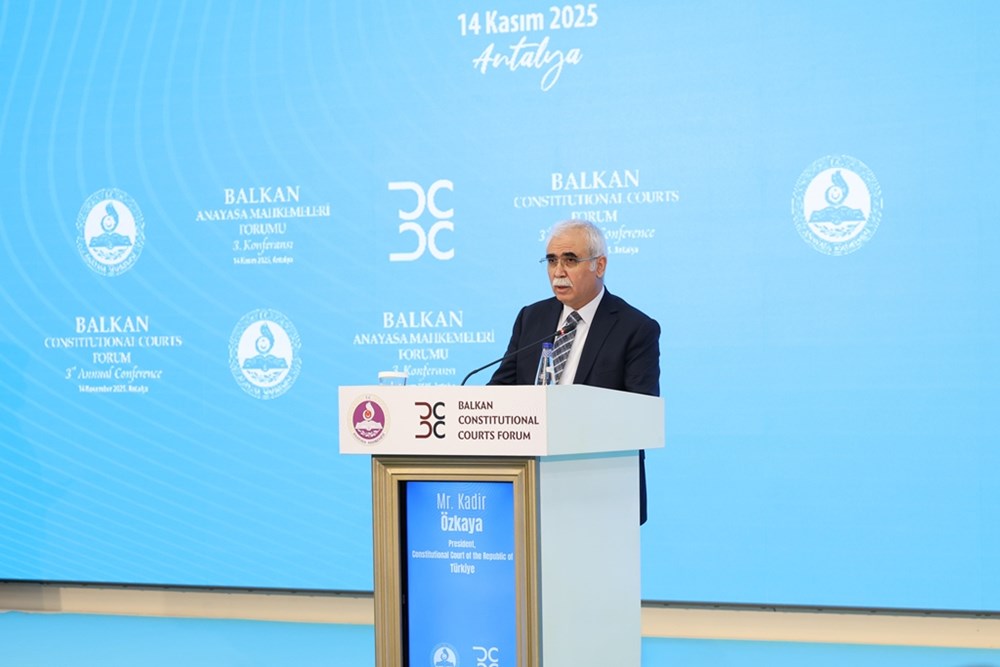
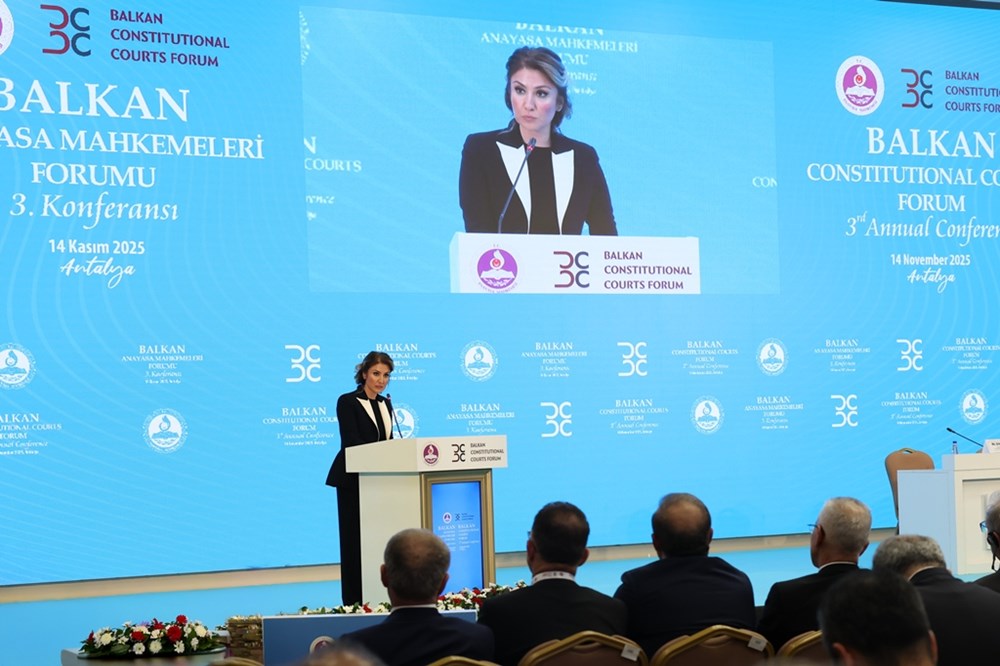
President of the Turkish Constitutional Court, Mr. Kadir Özkaya, underlining the importance of constitutional cooperation among the Balkan countries, stated: “The protection of human rights is not only a responsibility entrusted to the judiciary, but also a pledge given to the shared conscience of humanity. In this regard, the steps we take together will help make the promotion of the rule of law and human rights a common pillar for the entire Balkan region.”
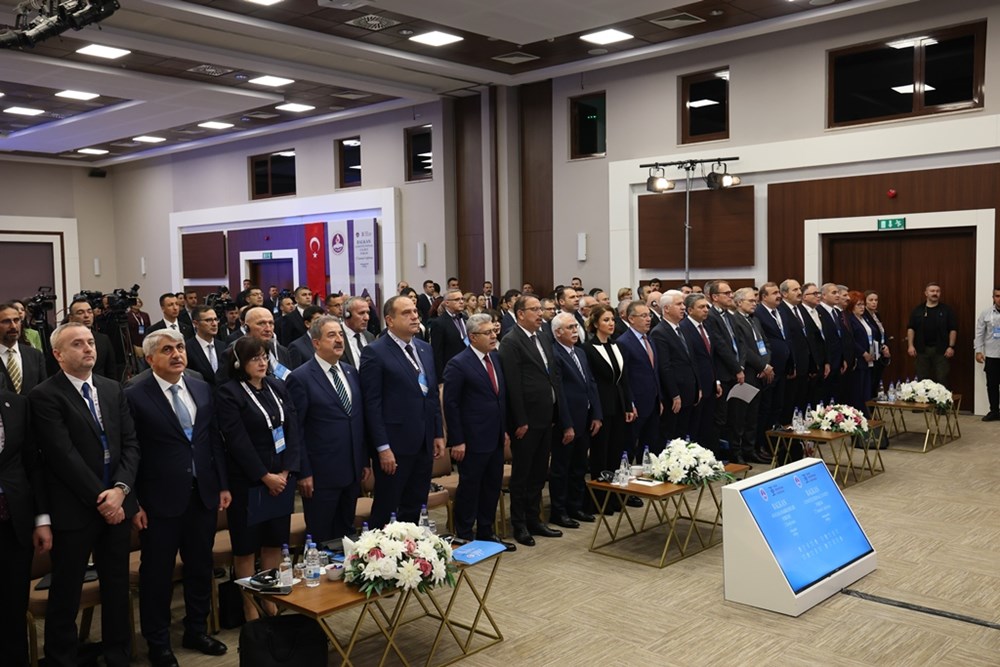
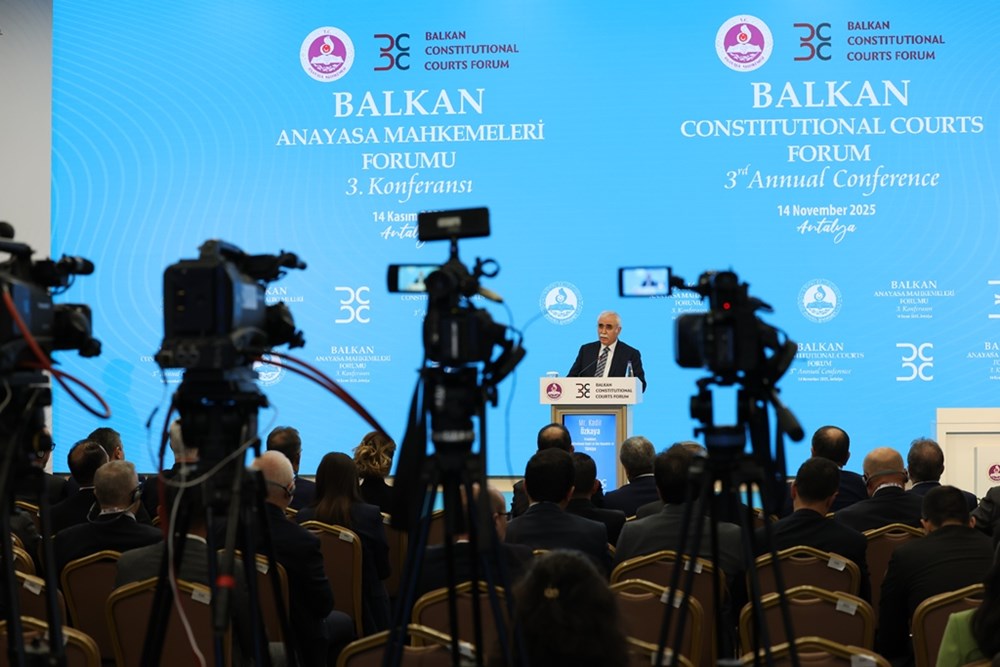
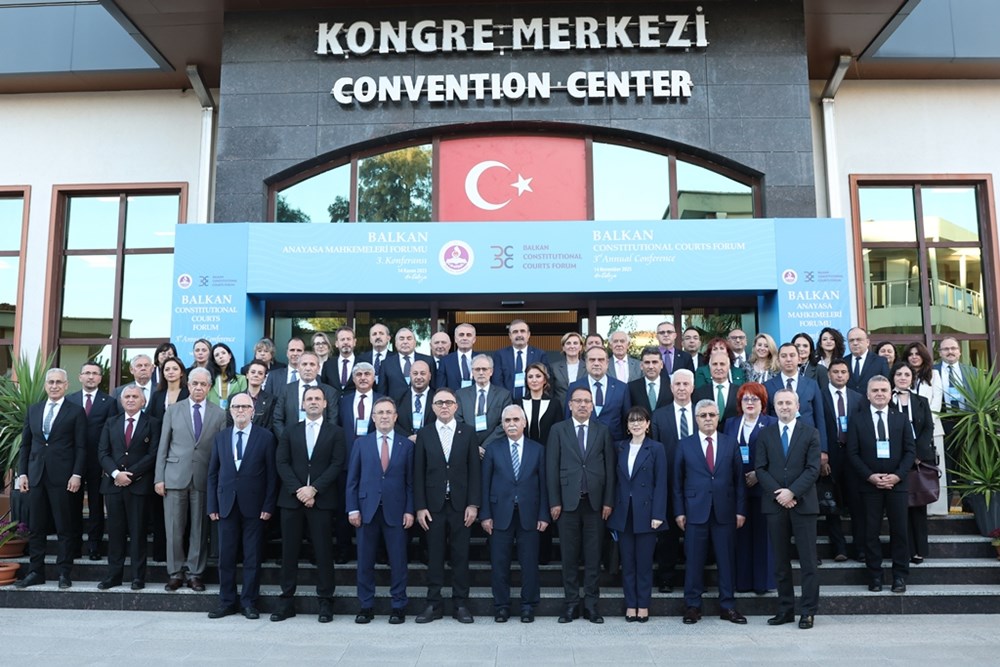
The 3rd Annual Conference of the Balkan Constitutional Courts Forum, held on the theme “Standardisation of Human Rights and the Role of Constitutional Justice”, was hosted by the Constitutional Court of Republic of Türkiye on 14 November 2025 in Antalya.
Among those attending the Conference were the presidents and judges of the Forum’s members–Constitutional Courts of Albania, Bulgaria, Montenegro, Kosovo, and North Macedonia– as well as representatives from its observers, the Constitutional Courts of Bosnia and Herzegovina, Croatia, and Romania. The Conference was also attended by the presidents and judges of the constitutional/supreme courts of Azerbaijan, the Turkish Republic of Northern Cyprus, and Moldova, as well as the Permanent Secretary-General of the Conference of Constitutional Jurisdictions of Africa and distinguished judges of the European Court of Human Rights. At the national level, President of the Turkish Court of Accounts Mr. Metin Yener, Chief Public Prosecutor of the Court of Cassation Mr. Muhsin Şentürk, Chief Public Prosecutor of the Council of State Mr. Cevdet Erkan, Deputy Minister of Justice Mr. Niyazi Acar, and Governor of Antalya Mr. Hulusi Şahin attended the Conference.
In his opening remarks, President Özkaya expressed his heartfelt condolences for the soldiers who lost their lives in the crash of a military cargo plane en route from Azerbaijan to Türkiye, and extended his deepest sympathies to their families.
Pointing out that in the globalised world, constitutional justice is shaped not only by national laws but also by universal legal norms and international jurisprudence, President Özkaya noted: “Therefore, cooperation among constitutional courts and supreme judicial bodies of different countries plays a crucial role in strengthening the rule of law, enhancing the protection of individual rights, and promoting justice on a global scale.”
President Özkaya, affirming that constitutional justice is fundamentally grounded in shared values such as the rule of law, human dignity, and the universality of fundamental rights, emphasised that the protection and promotion of these common values rests with both national courts and constitutional jurisdictions engaged in dialogue at the regional and global levels.
He further expressed that the Balkan Constitutional Courts Forum, which unites the constitutional courts of the Balkan countries, aims not only to facilitate the exchange of judicial experiences but also to foster a legal culture rooted in mutual understanding and shared principles. He accordingly stated: “The Forum provides a platform for dialogue, which regards the diversity of the Balkan region as a source of enrichment and harmonises different traditions around the shared principles of human rights, justice, and the rule of law. It also serves as a contemporary reflection of the shared commitment to peace, justice, and the rule of law. That is because the protection of human rights is no longer solely a national concern, but increasingly guided by common standards at regional and international levels.”
President Özkaya also highlighted the Turkish Constitutional Court’s active engagement on the international stage, in addition to its work within the domestic legal system. He stated that, through its member and observer roles at platforms such as the World Conference on Constitutional Justice, the Conference of European Constitutional Courts, the Association of Asian Constitutional Courts and Equivalent Institutions, the Balkan Constitutional Courts Forum, and the Conference of Constitutional Jurisdictions of Africa, the Court has taken part in numerous initiatives as an active stakeholder in the international legal sphere. President Özkaya stated that as a founding member of international platforms such as the Conference of Constitutional Jurisdictions of the Islamic World and the Conference of Constitutional Jurisdictions of the Turkic World, the Turkish Constitutional Court actively shares its expertise and experience with other constitutional courts. He also expressed: “Furthermore, the Turkish Constitutional Court has concluded memoranda of understanding with the supreme courts of over thirty countries. Guided by universal principles and standards on the rule of law and fundamental rights and freedoms, the Turkish Constitutional Court approaches the Balkan Constitutional Courts Forum from this perspective.”
Forum will represent a significant milestone in fostering constitutional dialogue and promoting shared values
President Özkaya emphasised that the Balkan Constitutional Courts Forum will represent a significant milestone in in fostering constitutional dialogue and promoting shared values among the Balkan countries. Expressing that the new concrete steps to be taken in this regard will contribute not only to addressing constitutional challenges of common interest, but also to developing shared principles aimed at promoting the rule of law, human rights, and the democratic standards, President Özkaya remarked: “Thereby, a permanent regional platform for dialogue and solidarity in the field of constitutional justice will be established, giving rise to a model of constitutional cooperation specific to the Balkans, which is in full harmony with and contributes to the multilateral partnerships that exist within the European constitutional justice framework. The protection of human rights is not only a responsibility entrusted to the judiciary, but also a pledge given to the shared conscience of humanity. In this regard, the steps we take together will help make the promotion of the rule of law and human rights a common pillar for the entire Balkan region.”
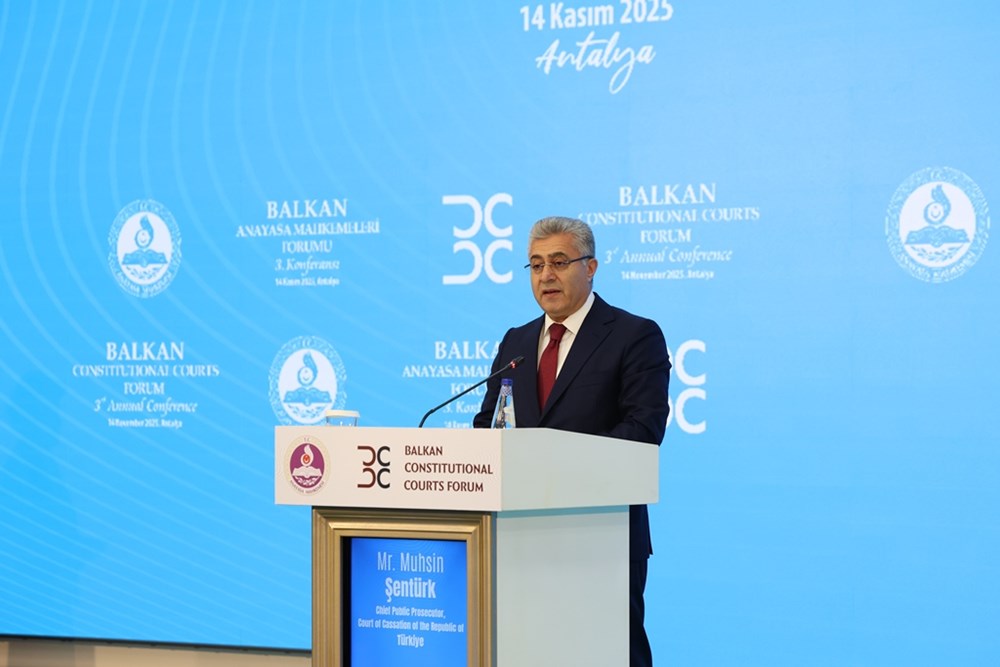
Mr. Muhsin Şentürk, Chief Public Prosecutor of the Court of Cassation, noted in his remarks that the notions such as human rights, the rule of law, and democracy constitute universal and indispensable values of our time. Recalling that the constitutional jurisdictions serve not only to maintain balance among the state organs, but also to ensure the protection of individuals vis-à-vis the state, Mr. Şentürk stated: “Through their rulings, constitutional courts both implement the legal norms and reinforce the sense of justice in the conscience of society, contributing to the universal advancement of human rights. The Balkan Constitutional Courts Forum is a landmark initiative that deepens our shared legal heritage and strengthens democratic standards across the region.”
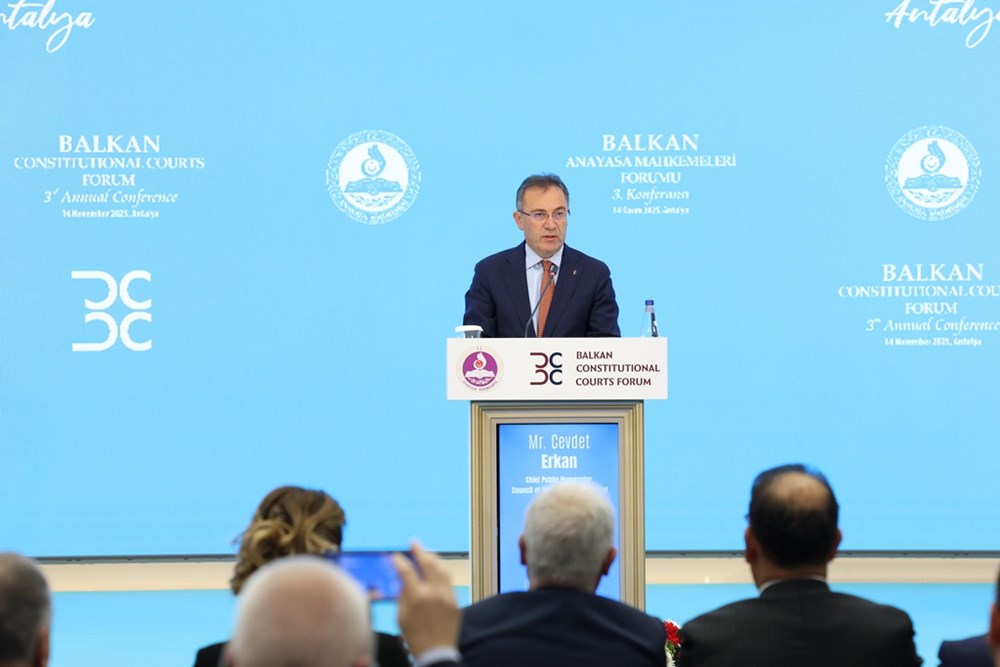
In his remarks, Mr. Cevdet Erkan, Chief Public Prosecutor of the Council of State, stressed that the Conference is not merely a gathering that strengthens institutional solidarity among judicial bodies; it is also an important event that brings together shared legal values, democratic principles, and a spirit of justice grounded in human rights. He expressed his aspiration that the Forum, which he regards as an exceptionally valuable platform, will further strengthen international judicial cooperation.
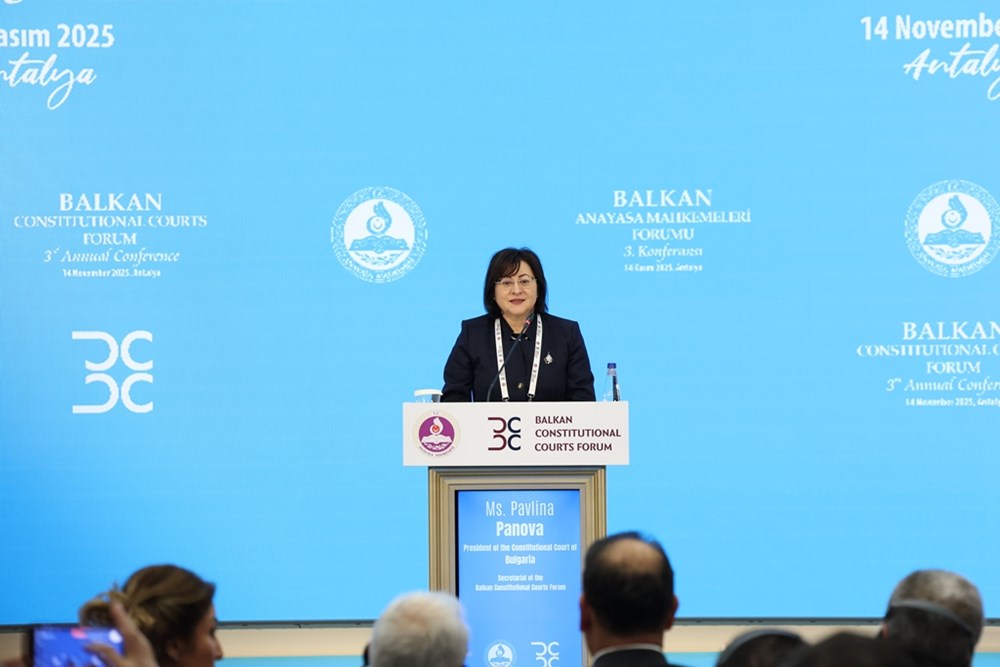
Ms. Pavlina Panova, President of the Constitutional Court of Bulgaria, which serves as the Secretariat of the Balkan Constitutional Courts Forum, highlighted the concrete and significant steps the Forum has taken so far, as well as its ongoing development and enrichment. Ms. Panova also remarked: “The Forum not only provides a platform for academic discussions but also provides an opportunity to cultivate meaningful relationships. We are dedicated to deepening constitutional dialogue, increasing our capacity, and representing a collective regional voice.”
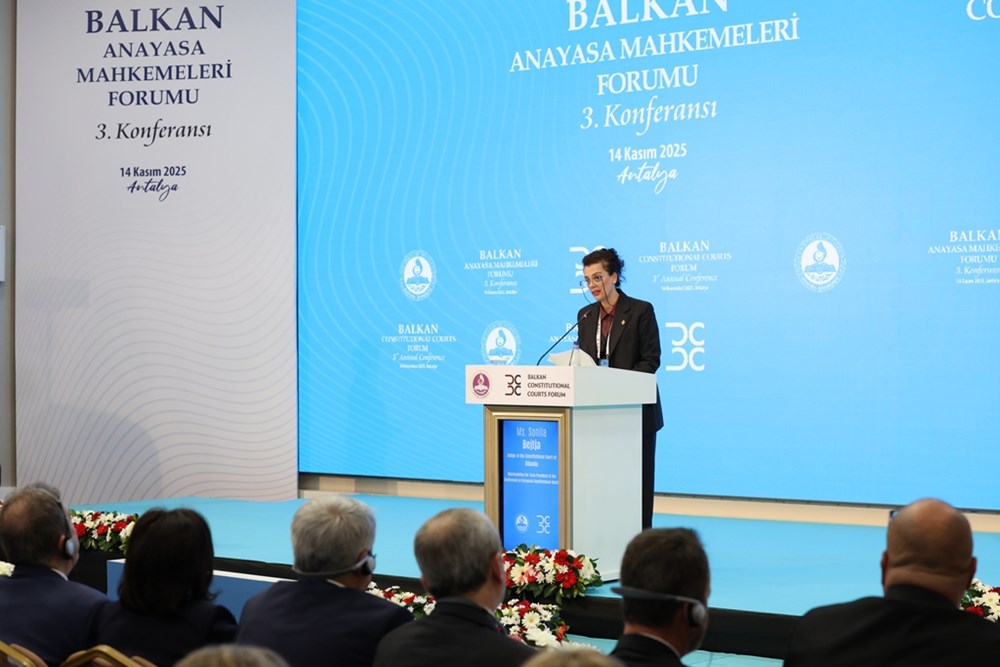
Representing the President of the Conference of European Constitutional Courts, Ms. Sonila Bejtja, Judge of the Constitutional Court of Albania, highlighted the importance of the Balkan Constitutional Courts Forum, noting: “Constitutional adjudication requires us to stay close to the people and mindful of their freedoms. Reading and learning from each other’s decisions facilitate the path toward standardisation. Courts have both judicial and cultural responsibilities. The Forum plays a vital role in fostering the exchange of knowledge and ideas among our courts.”
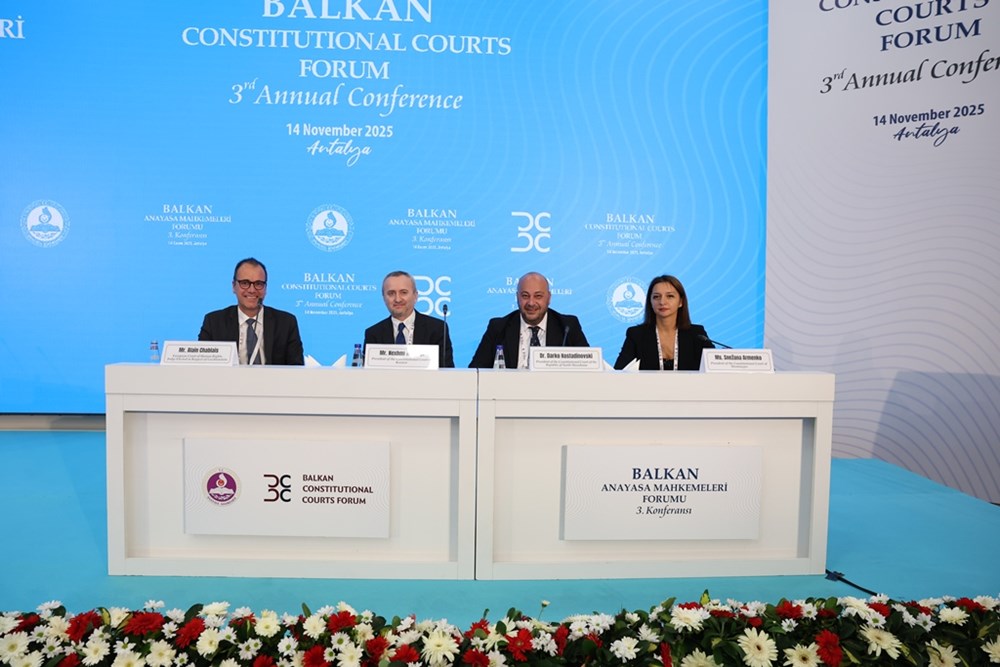
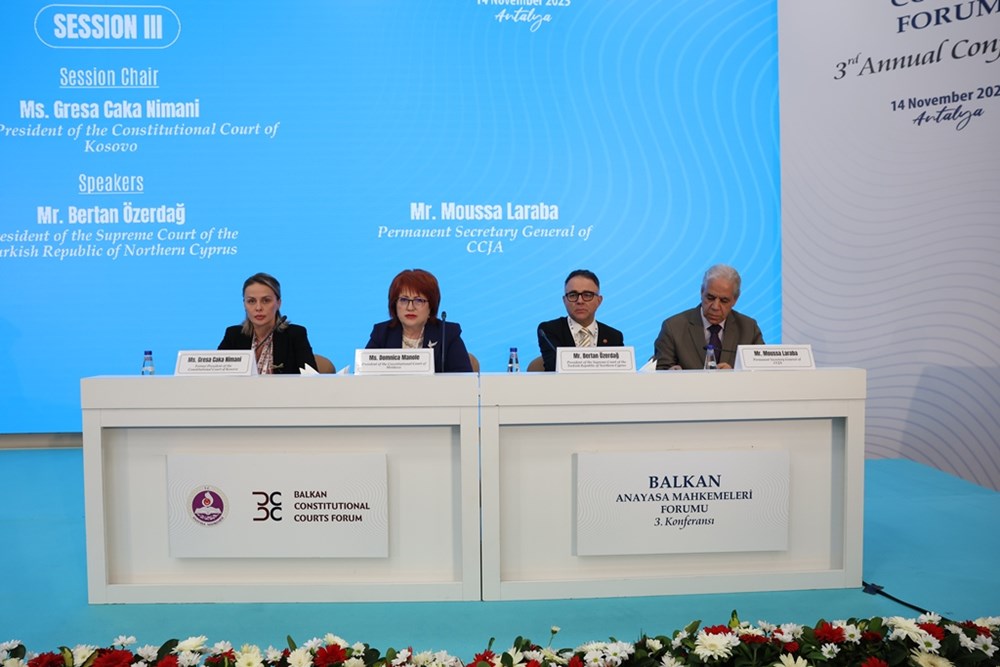
The opening remarks were followed by the academic sessions. The first session, moderated by Mr. Alain Chablais, Judge of the European Court of Human Rights (ECHR) elected in respect of Liechtenstein, featured presentations by Mr. Nexhmi Rexhepi, President of the Constitutional Court of Kosovo; Dr. Darko Kostadinovski, President of the Constitutional Court of North Macedonia; and Ms. Snežana Armenko, President of the Constitutional Court of Montenegro. During the second session, moderated by Mr. Latif Huseynov, Azerbaijan Judge of the ECHR, Mr. Mirsad Ćeman, President of the Constitutional Court of Bosnia and Herzegovina; Ms. Nevin Feti, Judge of the Constitutional Court of Bulgaria; and Mr. Gheorghe Stan, Judge of the Constitutional Court of Romania, delivered presentations. Moderated by Ms. Gresa Caka Nimani, former President of the Constitutional Court of Kosovo, the third session included presentations by Ms. Domnica Manole, President of the Constitutional Court of Moldova; Mr. Bertan Özerdağ, President of the Supreme Court of the Turkish Republic of Northern Cyprus; and Mr. Moussa Laraba, Permanent Secretary-General of the Conference of Constitutional Jurisdictions of Africa.
Following the sessions, Prof. Dr. Saadet Yüksel, Turkish Judge of the ECHR, delivered the closing remarks, highlighting that constitutional courts or equivalent institutions that exercise constitutional jurisdiction serve as the ultimate bodies upholding the supremacy of the constitution. Emphasising the crucial role of constitutional courts in protecting democracy, securing fundamental human rights, and upholding the rule of law, Prof. Dr. Saadet Yüksel also remarked: “Even though we operate in different continents and legal traditions, we are often united by a profound dedication to the protection of human rights and the advancement of constitutional justice. Our diversity is our strength, and our shared values –democracy, the rule of law, and respect for human rights– serve as our common foundation. Continued collaboration, harmonisation of our interpretations where possible, and mutual understanding will bring us closer to a common horizon of justice.”
President of the Turkish Republic, Mr. Recep Tayyip Erdoğan, addressed the 3rd Annual Conference of the Balkan Constitutional Courts Forum through a written message
In his message to the Conference, President Mr. Recep Tayyip Erdoğan expressed his best wishes for the success of the 3rd Annual Conference of the Balkan Constitutional Courts Forum, and conveyed his belief that the Conference, organized by the Turkish Constitutional Court, would address an important gap concerning the topics under discussion. Expressing his hope that the Conference would offer solutions to persistent human rights challenges on global level, President Erdoğan emphasised: “It is a noble duty to safeguard the inherent rights of human beings, the most distinguished of all beings, and to protect their dignity and honour, which is a duty inherited from our history and civilisation. Our millennia-old state tradition has been built upon the principle ‘Safeguard humanity, and the state will prosper’. The Republic of Türkiye is committed to treating all citizens equally, irrespective of their origins, faiths, or ideas, and considers individual, political and cultural differences as a source of enrichment. In our understanding, the state exists to serve its people. A state that disregards, alienates, or marginalises its citizens cannot be expected to provide services, promote welfare, or uphold justice. Over the past 23 years, Türkiye has implemented democratic reforms by removing legal provisions that could impede the freedoms of expression, belief, and enterprise, while making every effort to promote regional peace and stability. Today, with 150 years of constitutional experience, knowledge, and maturity, Türkiye serves as an example to many countries, particularly in its immediate neighbourhood. Türkiye regards it as its responsibility to stand against oppression, injustice, and lawlessness wherever they occur in the world, and to be the voice of the oppressed and the conscience of humanity. Türkiye remains resolutely committed to fulfilling its responsibilities in promoting peace, justice, stability, prosperity, and security.”
After a full day of sessions, the Conference concluded with Q&A sessions and the presentation of plaques.
Click for the full text of the remarks delivered by President Kadir Özkaya.